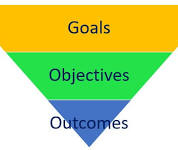
Course learning outcomes and objectives are foundational to educational design. Objectives describe what the instructor plans to cover from a teaching perspective, whereas outcomes detail what students can specifically prove they have learned or can do.

Course Learning Outcomes (CLOs)

  • Perspective: Student-centered: Focuses on what the learner can do.
  • Timeframe: Long-term: Measured at the end of a module or course.
  • Function: Demonstrates proof that the learner has mastered the material.
  • Best Practice: Usually written to be specific, measurable, action-oriented, realistic, and time-bound using SMART criteria.

Course Learning Objectives

  • Perspective: Instructor-centered: Focuses on teaching plans, content delivery, and what the instructor intends to present.
  • Timeframe: Short-term: Used to guide daily or weekly lesson planning.
  • Function: Serves as the roadmap for the instructional design.
  • Best Practice: Often outlines specific questions the instructor wants the course to explore.


How They Work Together                                                                                                                                     

Through a methodology known as Backward Design, educators map backward from the desired results:

  1. First, define the broad Goals.
  2. Then, define the measurable Outcomes.
  3. Finally, draft the Objectives (the planned activities and content) needed to help students successfully achieve those outcomes.

It is important to remember that outcomes are phrased from the student's perspective and written in a language they can easily understand. Writing effective learning outcomes requires using action verbs from the cognitive, psychomotor, or affective domains.

See Learning Outcomes Resources for more information.